

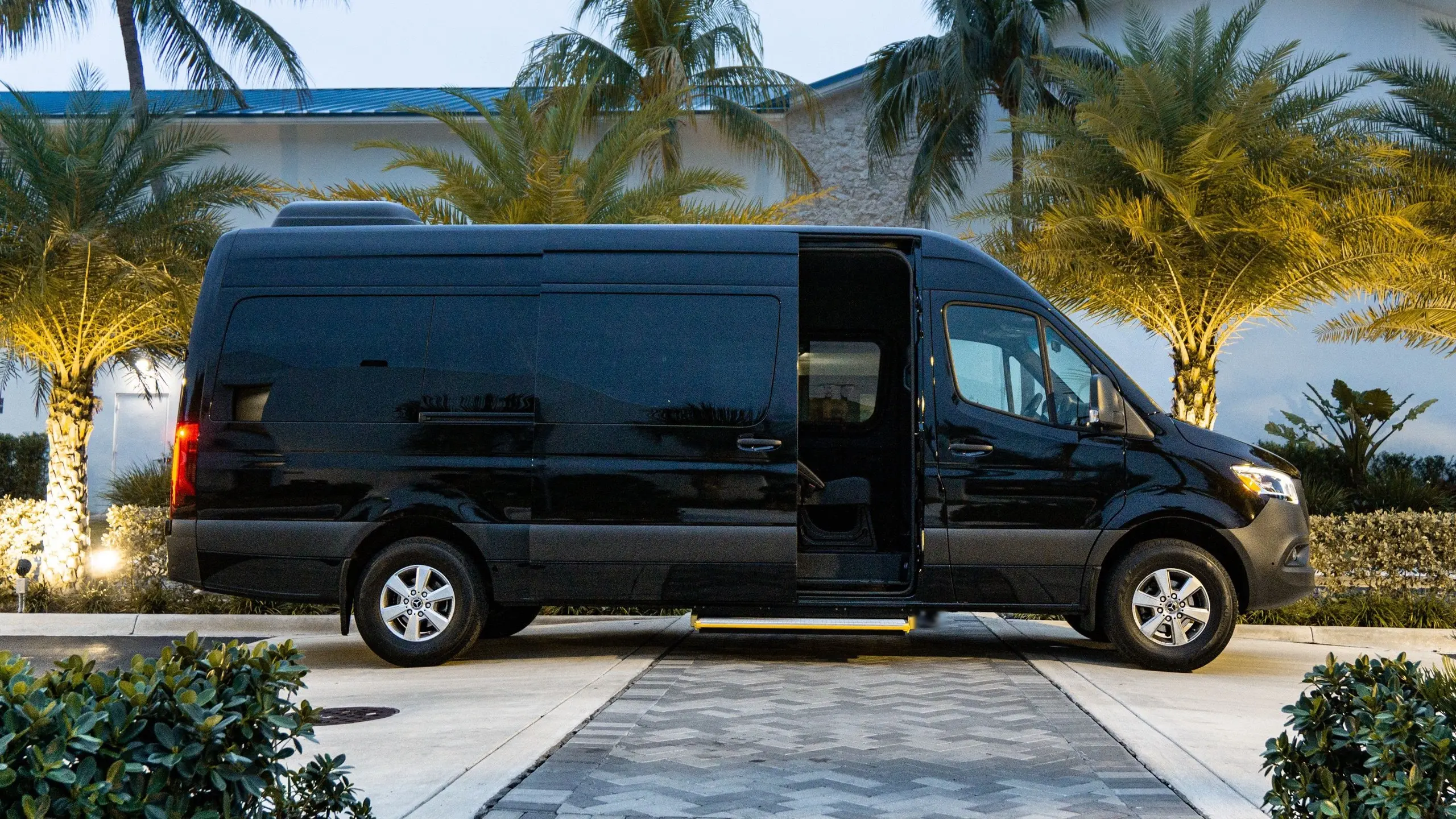
Charter bus vs minibus vs Sprinter: most group trips start with that choice, and the usual mistake is picking the wrong size rather than the wrong type of vehicle.
Too big and you pay for empty seats and a bus that cannot turn on the street outside the venue; too small and four people are left at the curb. Here is how to choose a bus size for a group, in the order that matters.
Start with two numbers: people and bags
The three group vehicles step up in size and differ sharply on luggage. The group vehicle sizes below are class-typical; your quote names the exact vehicle.
- Executive Sprinter: up to 14 passengers, roughly a bag each in the rear area.
- Minibus: 24 to 35 seats, carry-ons under the seats and a rear rack for larger bags. No restroom.
- Motorcoach: up to 56 seats, under-floor bays that take a suitcase per person, a restroom, reclining seats.
Executive Sprinter
- Passengers
- up to 14
- Luggage
- up to 14 bags
Best for Corporate teams, airport groups of 7 to 14, wine and brewery tours, weddings and private events
Quote this vehicleMinibus
- Passengers
- 24 to 35
- Luggage
- under-seat and rear rack
Best for Wedding and hotel shuttles, employee loops, day trips for 20 to 35
Quote this vehicleMotorcoach
- Passengers
- up to 56
- Luggage
- under-floor bays
Best for Day trips, multi-day tours, corporate offsites, church and school groups, out-of-state runs
Quote this vehicle
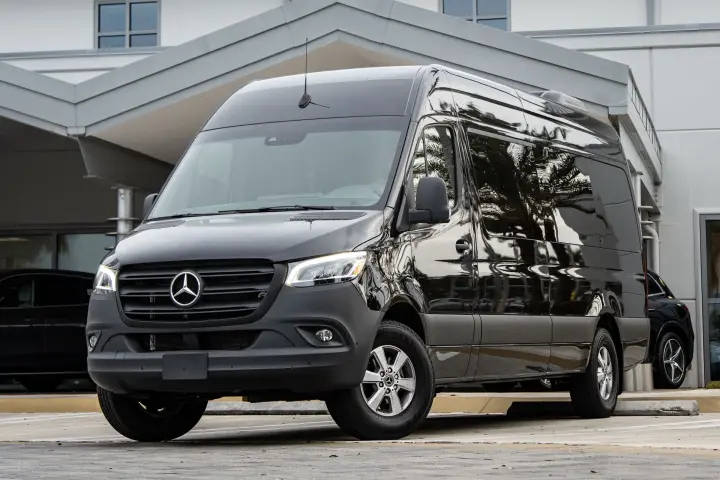
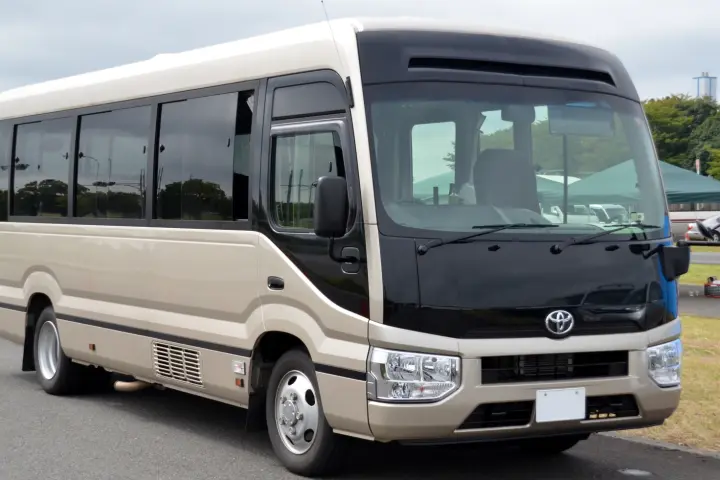
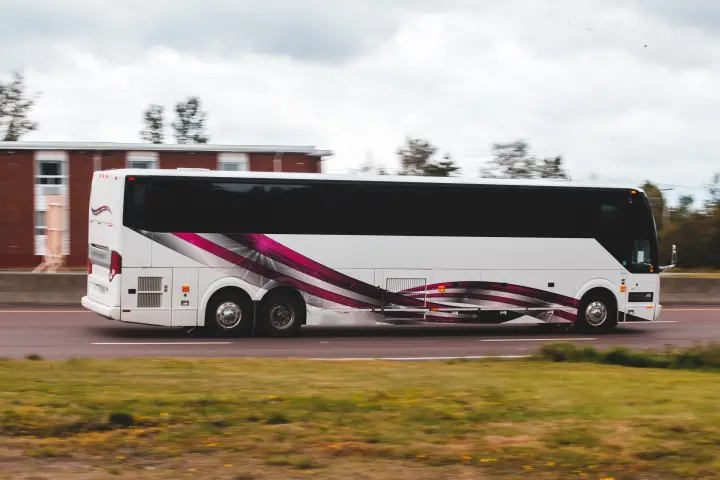
Fourteen people with carry-ons is a Sprinter. Fourteen people with full-size suitcases for a week away may not fit, because big cases fill the Sprinter’s rear area before every bag is in; ask for a minibus or a second vehicle to be quoted.
Thirty people on a day trip is a minibus. Thirty people with luggage for a tour is a coach, because the bags will not fit anywhere else. Count the bags before you count the seats.
Minibus vs Sprinter: the group that falls between them
The awkward headcount is 15 to 23. That is too many for one executive Sprinter and well short of filling a 24-seat bus. There are two sensible answers.
One minibus keeps everyone on one vehicle, with one driver and one arrival time. Two Sprinters suit a group that splits later, needs two drop-offs or has to stop at tight curbs. Ask dispatch to quote both and compare the totals.
Then the trip length and the restroom
Anything over about an hour with a mixed-age group needs a restroom, which only the coach has. A run to Atlantic City with forty adults is a coach anyway: the minibus class tops out at 35 seats, and the coach has the restroom.
A short shuttle between a hotel and a wedding venue often suits one or two minibuses even for a large guest list, because the buses loop rather than carrying everyone at once. Our wedding shuttle planning guide works through that loop arithmetic.
Then the streets: where each size can load
This is the factor people forget, and in New York it often decides the answer. A 45-foot motorcoach sticks mostly to avenues and major cross streets in Manhattan, can usually load at a hotel for a few minutes, and can wait almost nowhere.
A minibus usually clears a hotel porte-cochère, fits a Brooklyn loading zone and turns on the streets around Hudson Yards.
A Sprinter can stop at most curbs a large SUV uses.
For a city route with 15 to 35 people, the mid-size bus usually wins on access alone. For a wedding venue on a Dumbo cobblestone street or a Red Hook side street, the coach needs a staging plan and the smaller bus usually does not.

Then the shape of the day
A single big move (everyone from Midtown to a Hudson Valley venue at 8 a.m.) suits a coach. A loop (hotel to venue every 20 minutes for three hours) suits a minibus, because frequency matters more than capacity when people are waiting in a lobby.
A team of ten with a schedule of stops suits a Sprinter with a chauffeur who waits. Large events are often a mix: one coach for the first move, a smaller bus for the loop, a Sprinter for the crew, all on one timeline.

Then how each size is priced
The three vehicles are often priced differently, and that changes the comparison. Sprinters are commonly quoted flat for transfers and hourly for as-directed days. Minibuses are usually hourly, with a minimum, for loops and local days.
A coach is often a day rate that covers the stated hours and mileage, with the driver’s legal hours planned in and a second driver or an overnight added where a long day requires it.
Two smaller buses on staggered loops can cost less than a coach that needs its own staging plan, and one coach can cost less than three Sprinters. Judge each option by its price for the whole day, not by the hourly rate.
Charter bus vs minibus vs Sprinter: a quick decision table
| Your group | Vehicle |
|---|---|
| Up to 14 with carry-ons | Executive Sprinter |
| 15 to 23 with two drop-offs | Two Sprinters |
| 15 to 35 on a city route | Minibus |
| 36 to 56, tour luggage or a restroom needed | Motorcoach |
| Over 56 | Two vehicles, one timeline |
| A loop, not one move | Minibus, possibly two |
For the details of each service, see Sprinter van rental, minibus and shuttle rental and charter bus rental.
When it is close, take the larger vehicle: the price difference is usually smaller than the cost of leaving anyone behind. You can check passenger and luggage capacity for every vehicle class before you ask for a quote.
Three example sizing calls
- A church group of 42, ages 8 to 80, to a shrine three hours away. A coach: 42 people will not fit on a 35-seat bus, and a three-hour drive with that age range needs the restroom and room for the picnic bags.
- A tech team of 28 from SoHo to a Long Island City offsite. A minibus, because a coach has nowhere to stand on a SoHo side street and the drive is about 25 minutes; luggage is laptops.
- A wedding party of 13 from a Brooklyn brownstone to a church in Manhattan. An executive Sprinter, because a larger bus would block the street and the group wants to arrive together in one vehicle that fits the church’s curb.
What to send for a group quote
Headcount, bags per person, the route with stops, the times, the trip length, whether anyone needs a wheelchair lift, and the venue name. With those, dispatch can size the vehicle and explain why that size fits your day.
-
Tell us the trip
Pickup, drop-off, date, time and headcount. Under a minute on the form — or a phone call if you would rather talk it through.
-
Get a firm price
A dispatcher checks availability and replies with the vehicle class and the quote. Nothing is charged on this website.
-
Ride
Confirm, and the chauffeur’s details reach you before pickup. Airport rides are matched to the flight, not the clock.