

Wedding shuttle planning is the least glamorous job on the wedding to-do list, and the shuttle is the vehicle guests are most likely to talk about afterward if it goes wrong. Getting it right is mostly arithmetic and a few venue facts. Here is how to do it, step by step.
Wedding shuttle planning works backward from the ceremony
Start with the time guests must be seated, not the time the ceremony starts. If the ceremony is at 4 p.m. and the venue wants people in place by 3:45, and the drive from the hotel is 20 minutes, the last shuttle must leave the hotel by 3:20.
If one bus is moving everyone in two trips, the first trip leaves at 2:40 and the bus is at the hotel by 2:30.
The wedding party leaves the getting-ready location after the last guest shuttle so the couple arrives to a seated room; the parents leave 10 minutes before the couple.
Every time goes on one sheet that the planner, the venue and the drivers all hold. The wedding transportation page covers every vehicle that goes on it.
Size the shuttle to the hotel block, not the guest list
Usually only guests staying at the hotel block ride the shuttle; everyone else drives or takes a car. Count the block, then multiply the seats on each bus by the runs it can make before seating time.
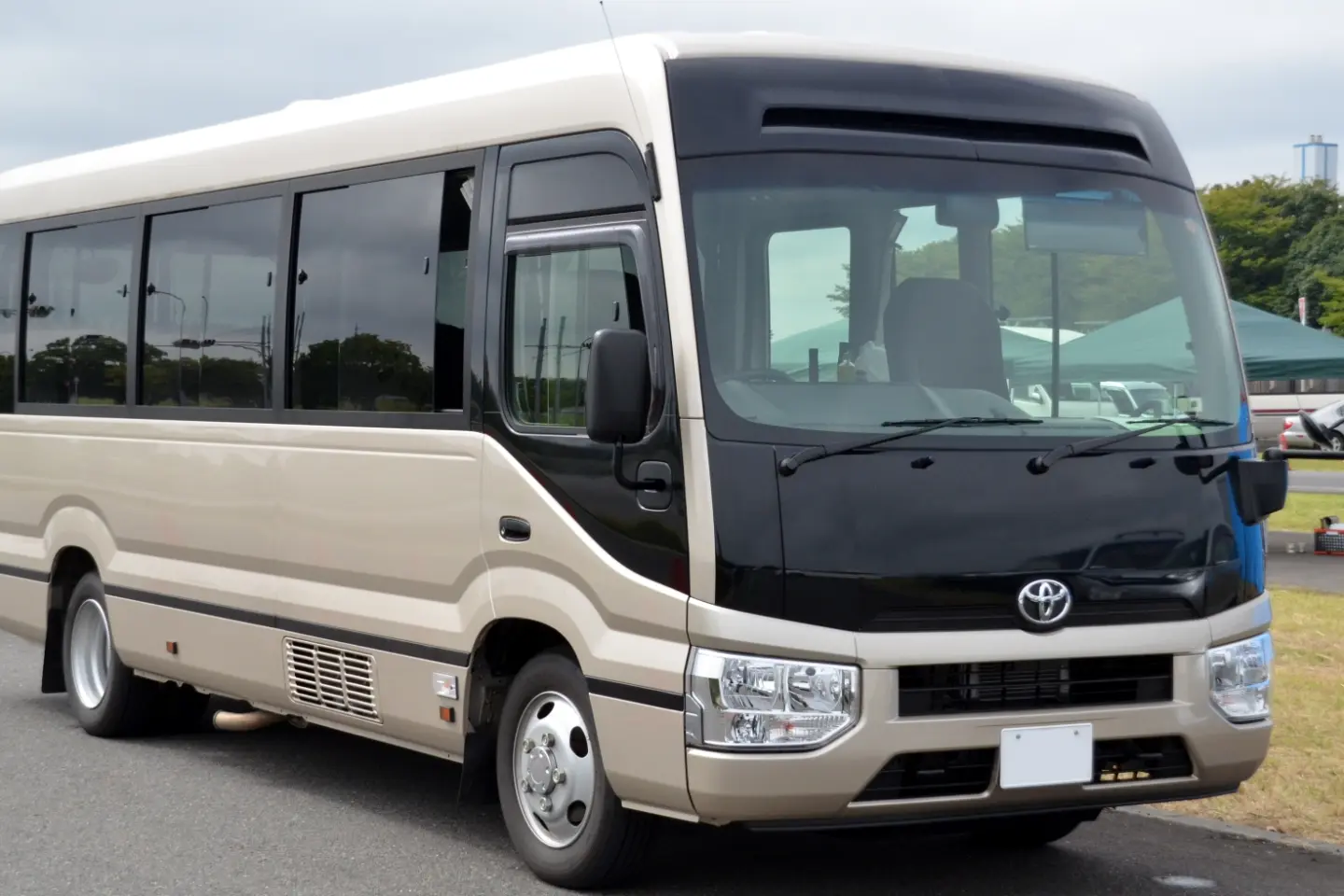
With the 20-minute drive in the sample timeline below, a round trip takes about 40 minutes. One 35-seat minibus makes two runs, at 2:40 and 3:20, and seats 70 guests. For a block of 100, add a second minibus on staggered departures so the lobby never fills.
For a block of 150 or more, full-size coaches (three 56-seaters for 150) make the big move before the ceremony and a minibus runs the loop afterward. The minibus and shuttle rental page has the vehicle detail, and our guide to charter bus vs minibus vs Sprinter sizing compares the three.
Plan the end of the night before the start
The reception loop is where shuttle plans most often fail. Decide the final departure time, put it on the sheet, and tell guests at the reception. Restart the loop an hour before the last dance so early leavers are not waiting.
Plan the block to the real end time: a run after the final departure is only possible if the driver’s legal hours allow it.

Know the venue rules
Many New York venues have their own vehicle rules, and the difference between a smooth day and a bad one is knowing them in advance:
- Manhattan hotels usually allow a minibus at the front for boarding but not for waiting; the driver stages nearby.
- Brooklyn waterfront and Dumbo venues often sit on cobbled or narrow streets; a minibus can reach most, a coach needs a plan.
- Long Island and Hudson Valley barn venues often have gravel drives and tight turns; ask dispatch to check the access before a coach is booked.
- Churches vary on whether a stretch limousine can wait at the door; ask the church office before the day.
- Some venues charge for bus staging. Ask the venue early, so the fee is in the budget rather than a surprise.
Brief the drivers
Give every driver on a wedding the sheet: pickup points, times, the venue contact, the planner’s mobile, the hotel’s loading rules, and the final departure time.
A sign in the window with the couple’s names stops guests boarding the wrong bus at a hotel with two weddings. Drivers should text dispatch, not the couple, when something changes.
The couple’s car and the family cars
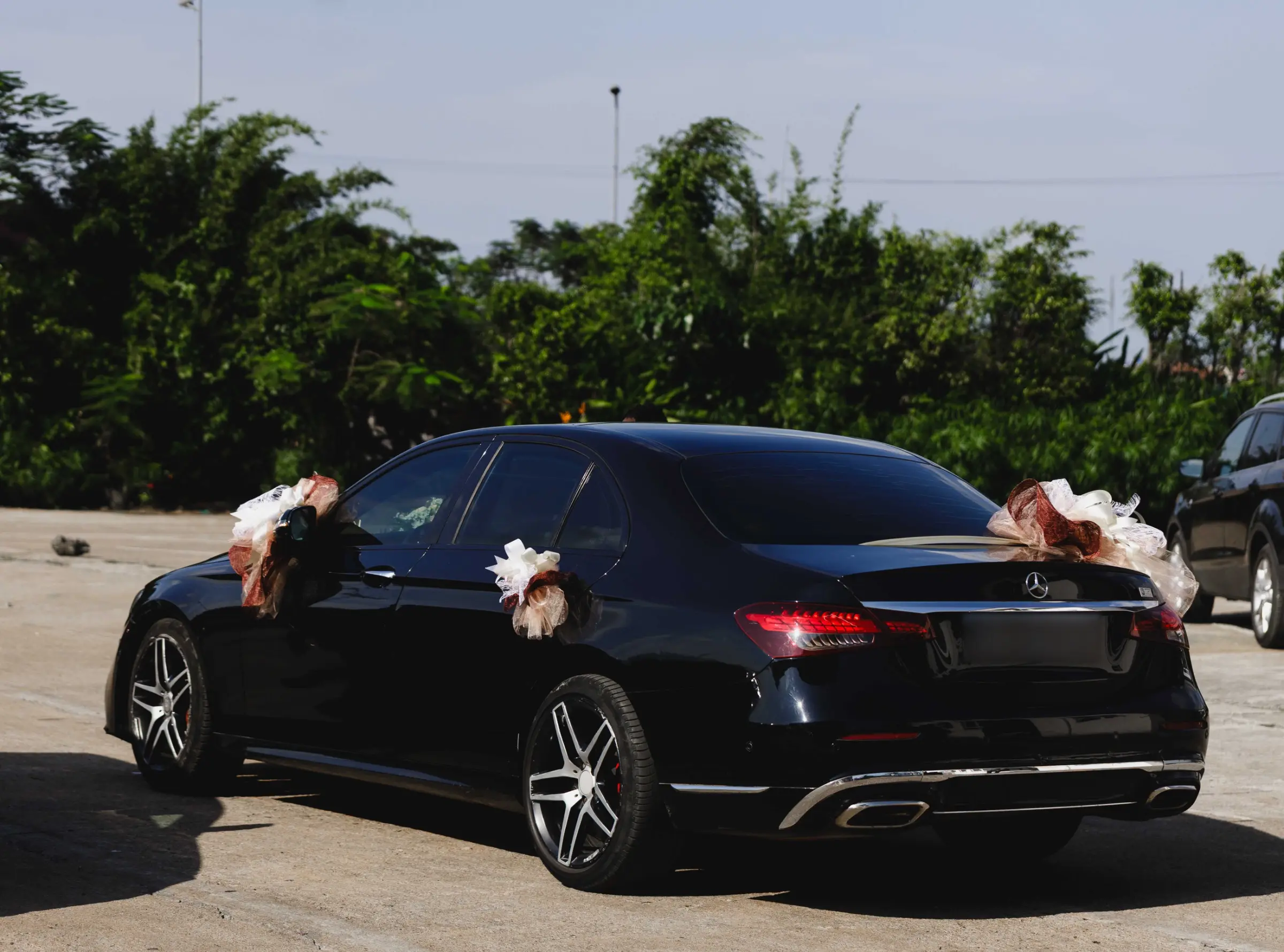
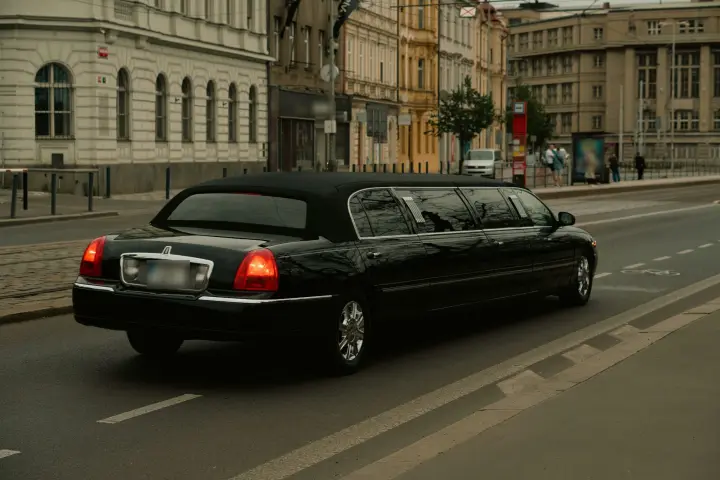
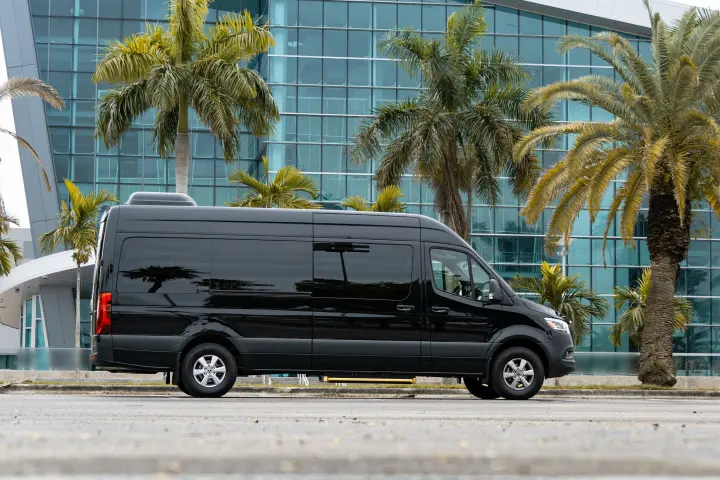
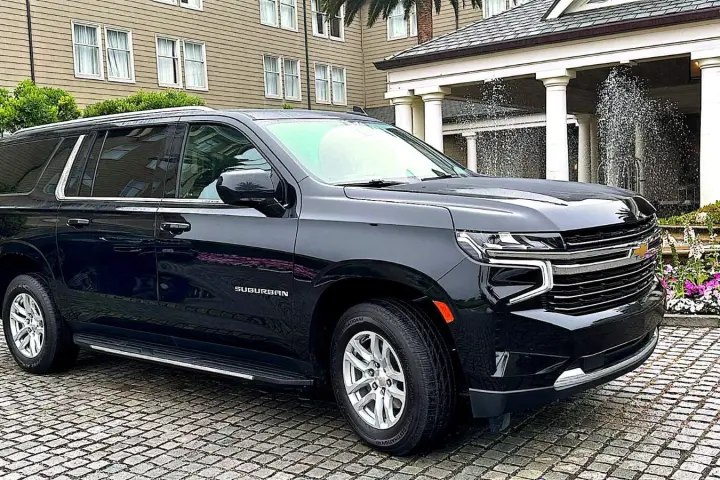
Separate from the shuttle and on the same sheet: a stretch limousine or a Sprinter limo for the couple and the wedding party, a sedan or SUV for each set of parents, and the send-off vehicle at the end of the night.
The limousine service page covers the choices. Keeping them on one quote means one dispatcher moves the whole timeline when the ceremony runs late, rather than three companies each moving their own car.
Stretch limousine
- Passengers
- 8 to 10
- Luggage
- limited
Best for Weddings, prom, anniversaries, birthdays, airport arrivals with a name board
Quote this vehicleSprinter limo
- Passengers
- 10 to 14
- Luggage
- limited
Best for Bachelorettes, birthdays, wedding parties, prom, concerts, nights out for 10 to 14
Quote this vehiclePremium SUV
- Passengers
- up to 6
- Luggage
- up to 6 bags
Best for Families with luggage, corporate visitors, airport groups of 4 to 6, client pickups and city days
Quote this vehicle
How much does a wedding shuttle cost?
Three things set the price: how many buses the arithmetic calls for, how long the block runs, and the date. The block usually runs from the first hotel pickup to the last drop-off, including the evening hours the bus waits near the venue.
A peak-season Saturday can be priced differently from a winter weekday. To judge wedding shuttle service cost, ask for a quote that lists each vehicle with its hours and every itemized line, then compare quotes line by line.
The wedding shuttle planning checklist
Ceremony time and venue; hotel block size; getting-ready location; wedding party size; send-off time; planner’s mobile; venue loading rules. Send those through the quote form, and dispatch can build the timeline around them.
A sample wedding shuttle timeline for a 4 p.m. ceremony
- 2:30 p.m. Minibus at the hotel, sign in the window, driver texts the planner.
- 2:40 First run departs (20-minute drive).
- 3:00 First run arrives at the venue; bus heads back.
- 3:20 Bus back at the hotel; last pre-ceremony run departs. Parents’ SUV leaves the getting-ready house.
- 3:30 Wedding party leaves in the Sprinter limo.
- 3:40 Last run arrives; guests seated by 3:45.
- 3:45 to 10:30 Bus staged at the venue; driver on standby for anyone who needs to leave early.
- 10:30 Reception loop restarts; with a 20-minute drive each way, a run leaves the venue about every 40 minutes.
- 11:45 Couple’s send-off car.
- 11:50 Final departure, announced at the reception and on the sheet.
Use it as a template. If your drive time or ceremony time is different, start from the seating time and work each line back the same way.
Common shuttle planning mistakes
Booking the shuttle for the guest list rather than the hotel block. Forgetting the return loop. Assuming the venue lets a bus wait at the door. Not telling guests the final departure time.
Booking three vehicles from three companies and discovering on the day that nobody is coordinating them. All fixable at the quote stage, none fixable at 11 p.m.